
Proecon.in

Policy Tools to Control Money Supply AHSEC Class 12 & Demonetization: Economics Notes & PYQs

This article comprehensively covers the topic Policy tools to control money supply AHSEC Class 12. This study material is sufficient for the AHSEC Class 12 Board Exam. The additional tasks a student must do are to go through the questions listed under the ‘Practice Questions’ heading and revise the material repeatedly.

Policy Tools to Control Money Supply | AHSEC Class 12

Meaning: Quantitative vs Qualitative Tools

Quantitative tools control the extent and volume of money supply in the economy — they act on the overall quantity of credit, without targeting any particular sector. Qualitative tools change the direction of money supply — instead of altering the total quantity of credit, they decide where that credit should flow.

Quantitative tools

  • Also called general credit control
  • Affect the overall volume of money supply
  • Apply uniformly across the economy

Qualitative tools

  • Also called selective credit control
  • Affect the direction/sector of credit flow
  • Target specific sectors or purposes

Quantitative Tools to Control Money Supply

Quantitative tools control the extent and volume of money supply in the economy. The RBI primarily uses four quantitative instruments:

1

Bank Rate

Bank rate is the rate at which the central bank gives loans to commercial banks. It is meant for the long term. There is an inverse relationship between the bank rate and money supply: if the bank rate is increased by the RBI, there will be less money supply in the economy, because borrowing from the central bank becomes costlier for commercial banks, who in turn raise the cost of credit for the public.

Bank Rate ↑ → Money Supply ↓
2

Cash Reserve Ratio (CRR) / Required Reserve Ratio

Cash Reserve Ratio (CRR) is the percentage of deposits which a bank must keep as cash reserves with the central bank. For example, if the total deposit is ₹100 and CRR is 20%, the commercial bank will keep ₹20 as a cash reserve with the central bank.

If CRR is increased, banks will be able to lend less money. Due to the resulting high rate of interest, people will also take fewer loans, and hence there will be less money supply.

CRR ↑ → Money Supply ↓
3

Statutory Liquidity Ratio (SLR)

SLR mandates banks to maintain a portion of deposits in liquid assets like cash, gold, or approved securities. Just as with CRR, a higher SLR leaves banks with less money available to lend — reducing the money supply — while a lower SLR frees up funds for lending.

SLR ↑ → Money Supply ↓
4

Open Market Operations (OMO)

Open Market Operations refer to buying and selling bonds issued by the government in the open market. In case of inflation, the RBI sells bonds in the open market to reduce the volume of money supply from the economy, and in case of deflation, the RBI again buys those bonds to increase the money supply.

RBI sells bonds → Money Supply ↓
Quick revision: effect of quantitative tools on money supply
ToolRBI's actionEffect on money supply
Bank RateIncreasedDecreases ↓
Bank RateDecreasedIncreases ↑
CRRIncreasedDecreases ↓
CRRDecreasedIncreases ↑
SLRIncreasedDecreases ↓
Open Market OperationsRBI sells bondsDecreases ↓
Open Market OperationsRBI buys bondsIncreases ↑

Qualitative Tools to Control Money Supply (Policy Tools to Control Money Supply AHSEC Class 12)

Qualitative tools change the direction of money supply. The RBI uses four main qualitative tools:

1. Moral Persuasion

In this process, the central bank may advise commercial banks, or hold a meeting with the managers, or write a letter for a specific purpose — such as Moral Persuasion to not provide loans to a specific sector.

2. Margin Requirement

Margin requirement is the difference between the market value of collateral and the granted loan amount. When the central bank wants to increase the money supply, it lowers the margin requirement, and vice versa.

Margin Requirement ↑  →  Loans ↓  →  Money Supply ↓
Margin Requirement ↓  →  Loans ↑  →  Money Supply ↑

3. Credit Rationing

If the central bank wants to promote a certain sector, it can make a minimum quota for this sector to spend. Credit Rationing ensures that funds are available for essential sectors like agriculture and infrastructure, while discouraging non-essential activities.

4. Direct Action

If all the other tools and policies have failed, the central bank may take Direct Action against commercial banks, such as restrictions on loans or penalties, or, in extreme cases, may cancel the bank's license.

Demonetisation 2016: Objectives & Impact | AHSEC Class 12

Demonetisation in India (2016): Objectives, Impact and Its Role in Controlling Money Supply

Last updated: · 6 min read

What Was Demonetisation?

November 2016

The announcement

An initiative taken by the Government of India in November 2016, demonetisation withdrew the legal-tender status of the two largest currency notes then in circulation.

Immediately after

Old notes invalidated

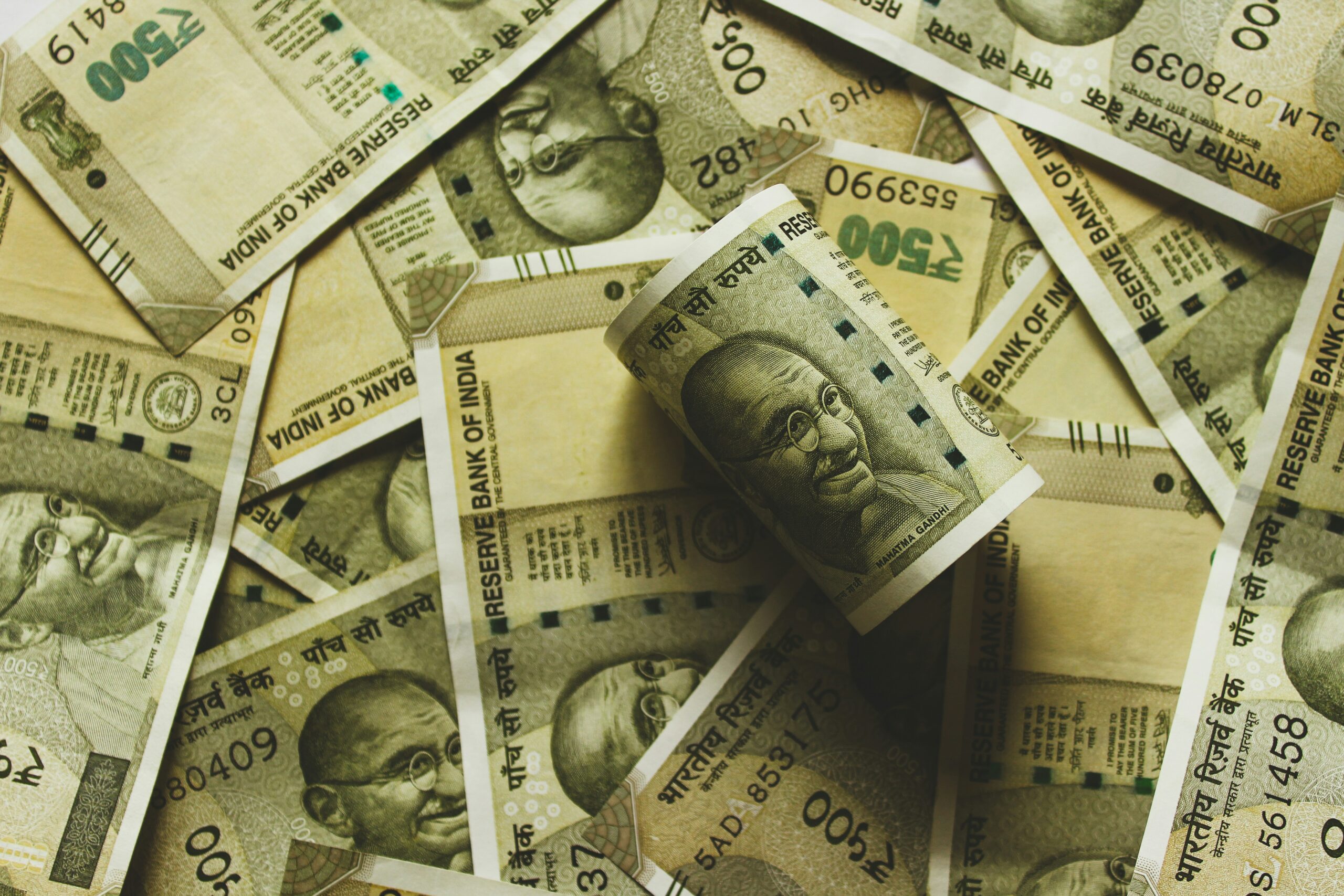
Old currency notes of ₹500 and ₹1000 were no longer legal tender.

In its place

New notes issued

New notes of ₹500 and ₹2000 were issued to replace the demonetised currency.

Objectives of Demonetisation

The objective was to tackle the problem of corruption, black money, terrorism, and circulation of fake currency in the economy.

Criticism and Challenges

  • It has received both appreciation and criticism from economists and the public.
  • There were long queues outside banks and ATM booths as people rushed to exchange old notes.
  • A shortage of currency disrupted day-to-day cash transactions for weeks.

Positive Impact of Demonetisation

  • This initiative has had a positive impact too — it improved tax compliance as unaccounted cash had to be explained or deposited.
  • It promoted the formal financial system; people deposited their savings in banks rather than holding cash.
  • It helped in the transition of the cash economy into the formal economy, encouraging digital and bank-routed transactions.

Key Takeaways

  • Demonetisation (Nov 2016) withdrew ₹500 and ₹1000 notes as legal tender; ₹500 and ₹2000 notes were issued in their place.
  • Its objectives were to fight corruption, black money, terrorism financing and fake currency.
  • Short-term challenges included long bank/ATM queues and a currency shortage.
  • Long-term benefits included better tax compliance and a push toward a formal, bank-routed economy.
Policy tools to control money supply AHSEC Class 12

Practice Questions (Policy Tools To Control Money Sypply AHSEC Class 12)

Important board exam preparation questions for Class 12 Macroeconomics.

  1. Define bank rate and cash reserve ratio?
  2. Explain the money multiplier process in an economy.
  3. Explain the functions of RBI.
  4. What are the instruments of monetary supply used by RBI? Explain any one of them.
  5. How does the central bank use its qualitative credit control measures to control the inflationary situation of an economy?
  6. Explain how commercial banks create credit.
  7. Explain How credit rationing and margin money help to control credit in an economy.

The topic Policy Tools to Control Money Supply AHSEC Class 12 completed here

Leave a Comment

Your email address will not be published. Required fields are marked *

Scroll to Top